
originally published January 21, 2012
John Paul Scott. The man with three first names. His other claim to fame is his successful escape from Alcatraz Island. You didn’t see that, but when I typed ‘successful’, I used finger-quotes. Perhaps actual quotes would have been a better way to convey this. John made it to San Francisco, but it wasn’t like Clint Eastwood’s triumphant success in that movie.
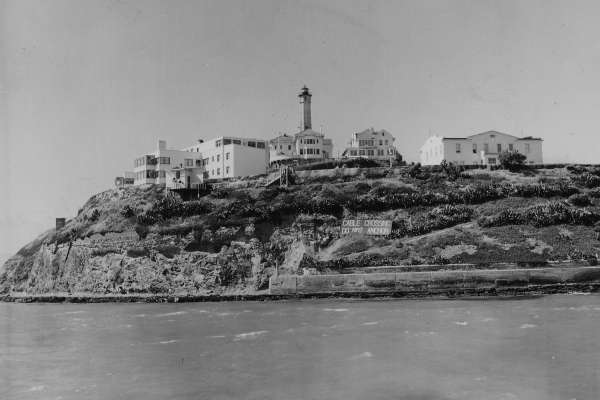
I’ve always been fascinated with Alcatraz, an island so perfectly positioned to be a prison. From the mainland it doesn’t look impossible for a prisoner to make the swim (sharks notwithstanding), but the stories of those who tried and failed are numerous, and almost Wile E. Coyote-esque in their repeated blunderances.
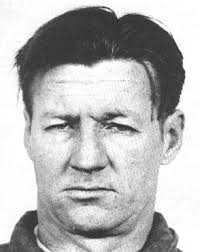
In April of 1936, Joseph Bowers snagged the honor of being the first to try to escape Alcatraz after its conversion from a military facility. Well, maybe. A witness claimed that Bowers, who’d been locked up for swiping $16 from a post office, was just climbing up to reach the wall and feed some seagulls. The guy liked to feed seagulls. No matter, a guard saw him and shot him dead.
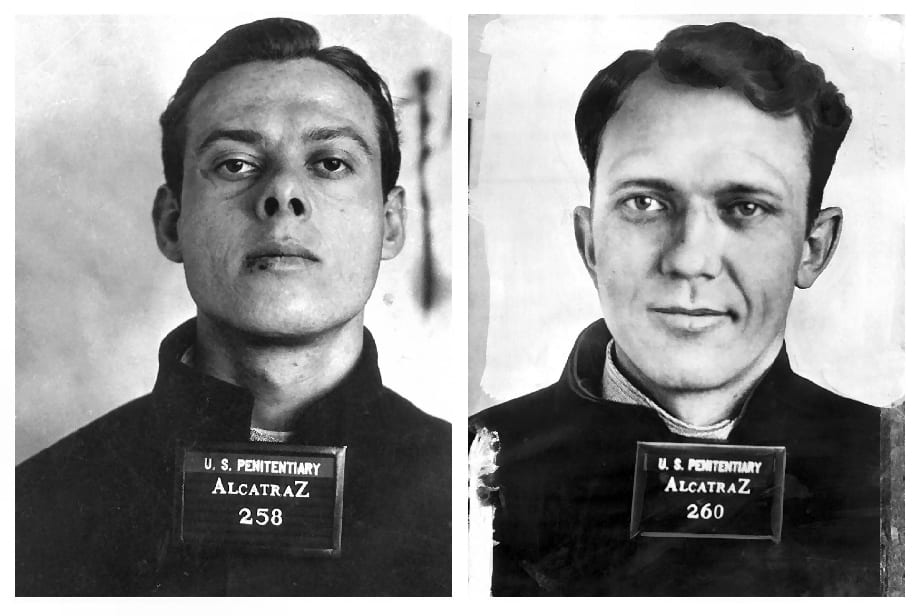
A year and a half later, Teddy Cole and Ralph Coe made their break. From the materials shop they smashed some glass and sawed through some metal before clambering to the shore. They were using 5-gallon cans to stay afloat as they headed toward San Francisco. A witness saw one of the cans shoot up in the air seconds before Roe was pulled beneath the surface. Cole floated a ways further, toward the Golden Gate Bridge, before suffering the same fate. A shark? Maybe. Vortex of space-time? Hopefully. Neither body was recovered.
May 1938, three guys made the next attempt, and it wasn’t nearly as graceful. Leaving woodshop duty (and really, is it wise to hand a bunch of prisoners woodshop tools?), Whitney Franklin, Thomas Limmerick and ‘Tex’ Lucas took out a guard with a hammer to the back of the skull. Next, they slipped through a window and up to the roof. Here’s where their plan fell apart. It’s a roof. The towers, stacked with guards, are higher up than the roof. Can you see this coming?
Limmerick and Franklin were shot. Lucas, who quickly calculated his present odds of escape and came up with “Way-Screwed”, surrendered. Limmerick died that night, the guard died the next day. Lucas and Franklin were charged with murder and handed a life sentence on top of the life sentences they were already serving.
I should note that this wasn’t Tex Lucas’s only prison scrap. Two years earlier he had spent some time in solitary for stabbing another Alcatraz prisoner in the back with a pair of scissors. That prisoner was Al Capone.
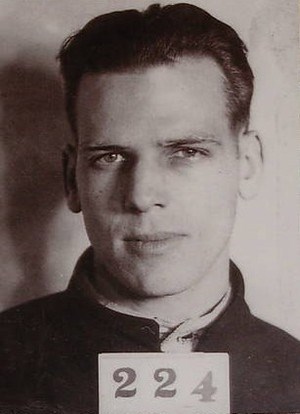
Early the following year, five inmates from the most secure cell block on the island (I hesitate to call it “The Rock” because that conjures up awkward images of both Nic Cage and Dwayne Johnson) took their shot. They had a makeshift raft, which they were in the process of assembling near the shore when the guards caught sight of them and opened fire. Arthur ‘Doc’ Barker was killed, and the others were captured.
The bars of Alcatraz were considered to be tool-proof. Cole and Coe had escaped through a mesh window covering, but when four guys tried to saw through the bars in May 1941, they were caught before their tools could do any damage. You’d think at this point the prisoners would resign themselves to their fate, and enjoy the fact that their incarceration includes the sound of waves and humid salty air that’s probably really good for their skin. But no. They just kept trying to leave.
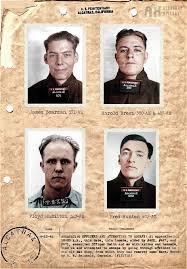
On to April, 1943, when four men armed with shivs took two guards as prisoners, then stripped down to their underwear and greased themselves up before leaping out a window and down a 30-foot cliff into the freezing water. They had stuffed army uniforms into floating cans (the damn cans idea again!), but left two behind. No problem, within minutes the guards saw them and opened fire. James Boarman took one in the back of the head. A boat pulled up alongside Harold Brest and he was taken back into custody, along with Fred Hunter. The last escapee hid out in a cave for a couple of days, but decided the water was too cold, and slipped back into the building where he was captured.
In May of 1946 things turned really ugly. Six inmates got hold of the two guns in the cage in the main cell house. They might have made it out to the boat launch, but some guard forgot to leave the key where he was supposed to, and a firefight erupted. Two days later, three of the inmates and two guards were dead. Two of the remaining inmates got the gas chamber for their actions. This story could warrant a kilograph of its own.
Speaking of great stories, the June 1962 escape attempt may have been the only truly successful escape attempt from Alcatraz. I’d get into the details here, but I couldn’t do it justice. Watch the movie.
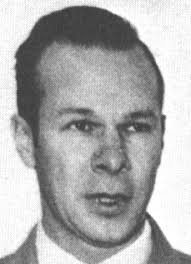
This brings us back to John Paul Scott, the last man to attempt to flee the prison, shortly before its shut-down in 1963. He and Daryl Parker used banjo strings to saw through the bars. Bars that were so resilient to tools they had specifically foiled previous escape attempts, were taken out by banjo strings. They had made water wings out of rubber boots, and tried to swim / float to the mainland. Parker made it as far as the little stump of an island ten yards away known as ‘Little Alcatraz’, but Scott made it to shore.
He was the first man to make it to shore by swimming; the 1962 gang had used a raft made from raincoats. He made it. He was free!
And then he passed out. Stricken with hypothermia (it was December… honestly, a little patience might have meant that Clint Eastwood played this guy in the movie instead. But no, a group of teenagers made a call when they found Scott laying unconscious under the Golden Gate Bridge, and he was quickly sent back to his cell. He died in prison in 1986.
Alcatraz earned its reputation. Nothing short of a vortex of space-time (or perhaps a well-fashioned raincoat-raft) was going to allow escape. It’s almost as though the swim across that water was downright impossible.

 1000 Albums, 1000 Dates